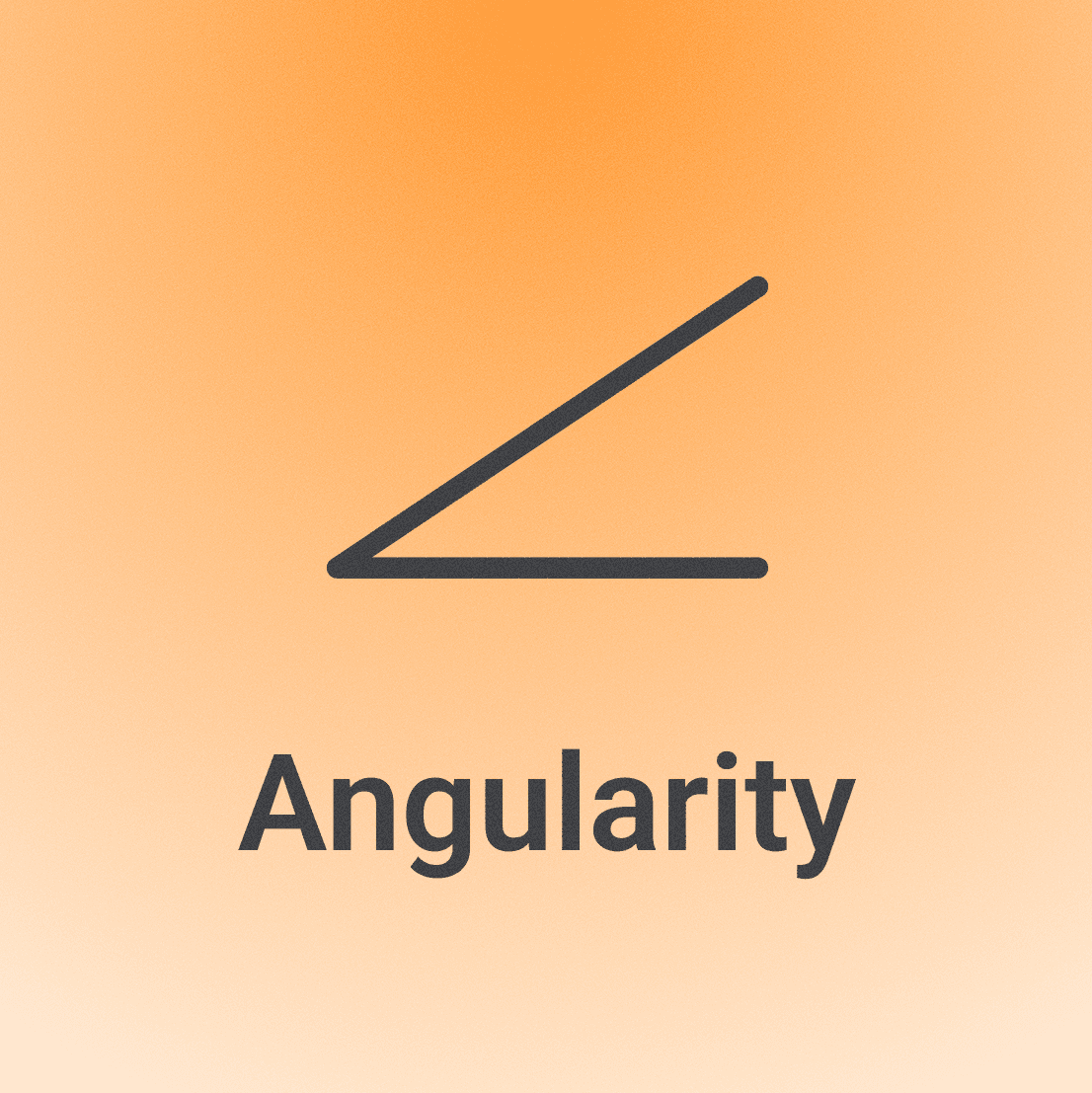
Angularity
Angularity in GD&T is a symbol that defines the orientation of one feature relative to another at a specified angle within a 3D tolerance zone.Surface control shown to left. Angularity can also apply to a FOS where the derived median plane or line is controlled.
Contents
1What is angularity
Angularity in GD&T defines the orientation of a feature relative to another at a specified, non-90° angle. It creates a 3D tolerance zone, typically two parallel planes, tilted at the referenced angle. A surface must lie entirely within this angled zone when angularity is applied as a surface control.
Angularity can also be applied to a feature of size (FOS), where it controls the derived median plane or derived median line, ensuring the feature’s mid-plane or mid-axis stays oriented at the required angle, even if the actual surface varies. It strictly governs orientation, not location or form (though form errors must still fit within the tolerance zone).
2How angularity looks on a drawing
In this drawing, the 60° dimension sets the nominal angle of the sloped surface relative to datum A. The angularity feature control frame (the ∠ symbol with 0.75 | A) tells you how tightly that angled surface must be oriented to datum A. It creates a 3D tolerance zone made of two parallel planes that are tilted exactly 60° from the datum. The entire sloped surface has to fit between those two planes. In other words: the 60° callout defines what the angle should be, and the angularity control defines how much that angle is allowed to vary while still remaining properly oriented to datum A.
3What angularity means during inspection
In simple terms: fixture the part to the datum, measure the angled face, and confirm it stays within the allowed “tilted window.”
In the illustration below, the part is set up on a datum block so that datum A is perfectly established. The sloped surface being inspected is supposed to sit at 60° relative to that datum. A CMM probe then measures a series of points across the angled face. Software compares those points to a pair of imaginary parallel planes that are tilted at exactly 60°, the angularity tolerance zone. If every measured point on the surface falls between those two angled planes, the part meets its angularity requirement.
- GD&T Cheat SheetAngularity's callout, tolerance zone and inspection setup, drawn.
- Drawing RedlinerCheck the orientation callouts on one of your own drawings.
Get the next one.
New notes go out to the Drafter newsletter. A free account signs you up, and opens the calculators and cheat sheets in the toolbox while you wait.
Create a free accountLearn GD&T · Step 10 of 16 · Orientation
See the whole pathKeep reading
 GD&TParallelismParallelism in GD&T ensures that a referenced feature maintains a parallel orientation to a specified datum surface or line within a 3D tolerance zone.
 GD&TStraightnessStraightness is one of the most fundamental form tolerances. It is used to ensure that a feature, such as a surface or an axis, conforms to a specific linear path without deviations. Straightness is crucial for parts where linear precision is vital for fit, function, and performance.
 GD&TRunoutRunout is a crucial concept that helps engineers control the functional relationship of features during rotation. Runout tolerances are applied to features that revolve around an axis, such as shafts, cylinders, and disks, to ensure that these components operate smoothly without excessive vibration or wear.