
Redliner
Somebody should check this before it goes out.
Upload a drawing, yours or a supplier's, and the Redliner reads it the way a manufacturing engineer would: every callout tested against ASME Y14.5-2018, every note and finish tested against what the floor needs to actually make the part. You get the findings, the zone each one sits in, and the rule it came from.
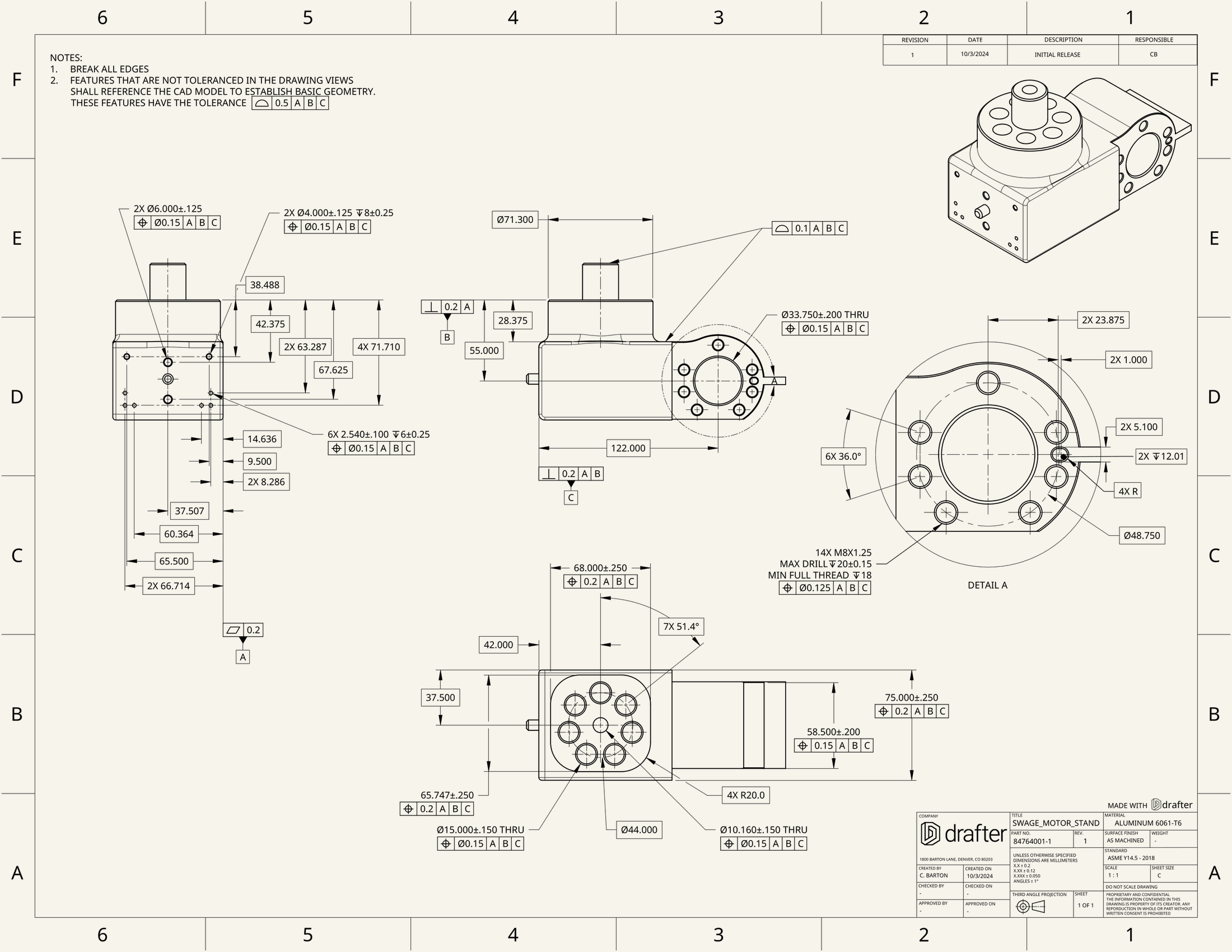
Ten findings, and the rule behind every one.
That is a real review of a real sheet. The datum scheme on this motor stand is sound, which is what makes the rest instructive: what the Redliner finds is the communication. A location dimension carrying both a plus-minus tolerance and a position frame. A radius callout with no value. An approval block still blank at release. Every one of them stops a machinist, and every one of them is invisible to the person who drew it.
Not a linter
It tells you which rule, and why it exists.
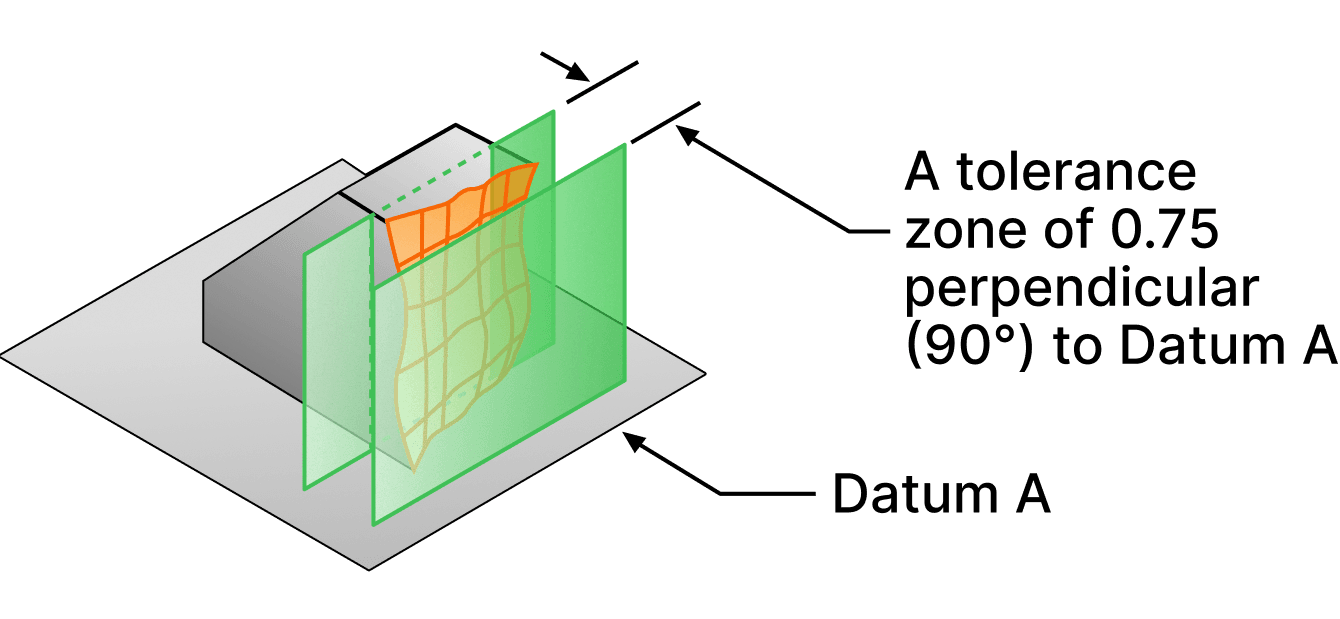
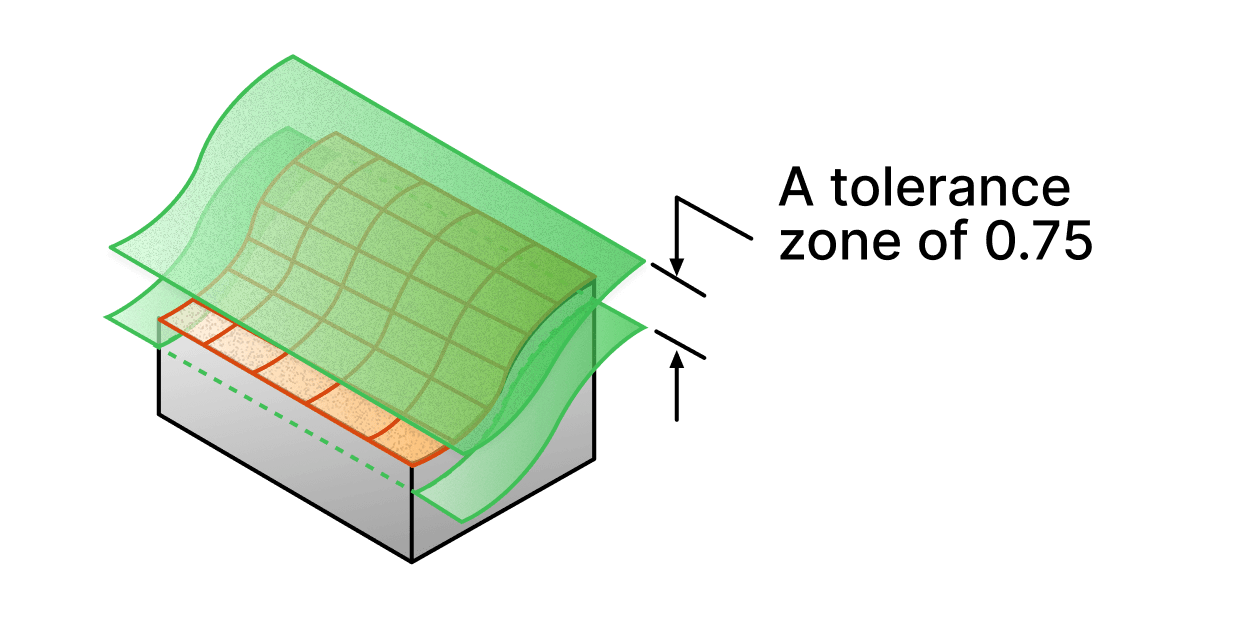
Keep this face square to datum A within 0.75 mm.
Every finding names the control it is about and what that control actually requires, in the same words the Toolbox uses. An engineer who disagrees can see exactly what the read was and overrule it. The drawing is still yours.
Open the ToolboxWhat it takes
Any drawing, including the ones you did not draw.
- Reads
- Any drawing
- Source
- Yours or a supplier's
- Checks
- ASME Y14.5-2018
- Returns
- Findings by zone
- Costs
- Nothing
A supplier's sheet reads the same as your own, which is where most teams get the fastest use out of it: the drawing you are about to accept is the one nobody on your side has checked.
See what Drafter puts on a sheetCapabilities
What the Redliner reads.
Any drawing, any source
Your sheet or a supplier's. The Redliner reads the drawing itself rather than the model behind it, so it works on the drawings you did not make and cannot open.
ASME Y14.5-2018
Feature control frames, datum references and callouts are tested against the 2018 rule set, which is the same standard every drawing Drafter produces is built to.

The rule, not just the flag
Each finding names the control it is about and what that control requires, so a disagreement is a conversation about the standard rather than about the software.
Ranked, and located
Findings come back as fixes, improvements and notes, each one carrying the zone it sits in, so a review is something you work down rather than a wall of text.
Manufacturing, not only geometry
It reads the notes, the finish and the material the way the shop will: a blanket AS MACHINED finish on a functional face is a finding, and so is a spec a supplier cannot buy to.
Your drawing stays yours
Nothing you upload is trained on and nothing is shared. The same isolated workspace the rest of Drafter runs in holds the free tools too.
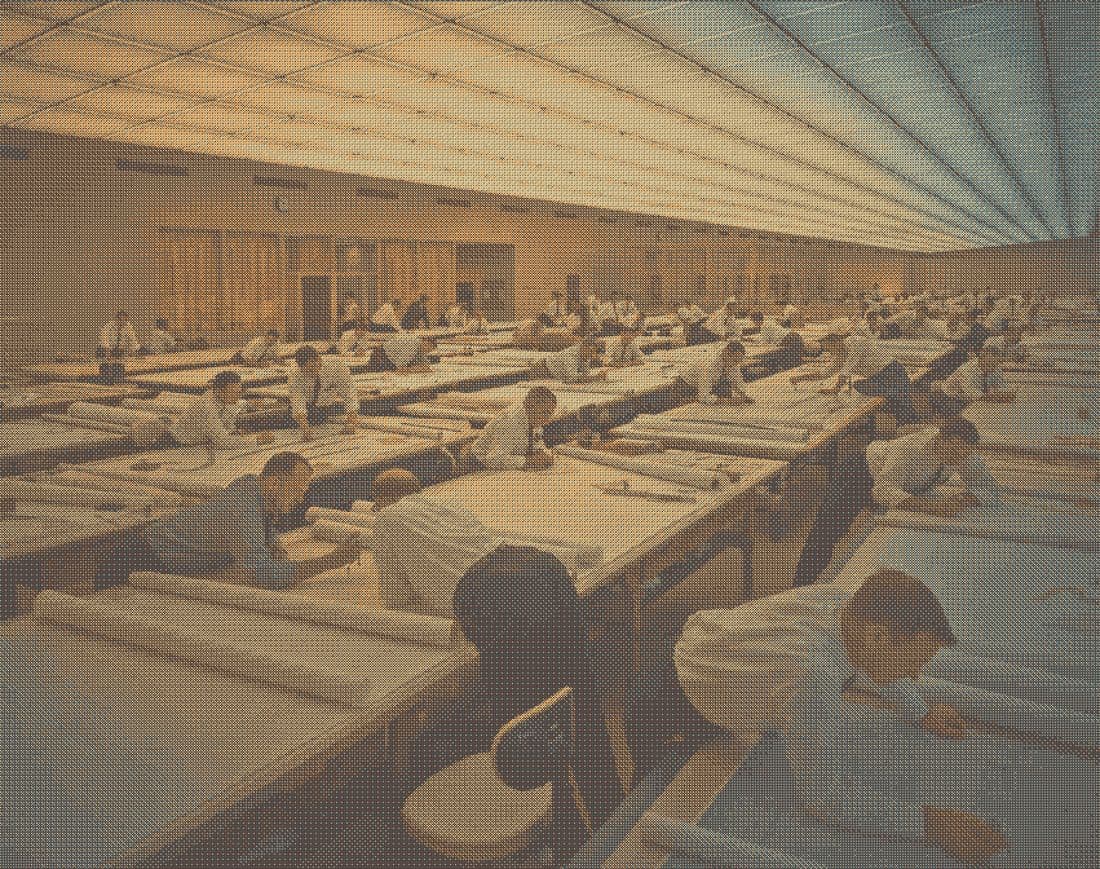
Checking a drawing used to be somebody's whole job.
In a drafting room the checker was the person who had been there longest, and nothing went to the floor without their mark on it. The room is gone. The work it did is not, so it happens at the shop instead, in the form of a phone call, a quote that came back high, or a part that was made exactly the way the drawing said.
What happened to the drafting roomQuestions
What engineers ask before they upload.
- Is it really free?
- Yes. The Redliner is part of the free Drafter Toolbox, alongside the calculators and the reference charts. It is the same read the paid product runs on the drawings it produces; the Toolbox is where you can point it at a drawing we had nothing to do with. If you want it configured to your company's own standards and conventions, or kept inside your own secure deployment, that is the paid version.
- Does it replace a drawing checker?
- No, and it does not sign anything. It does the pass a checker does first: reading every callout against the standard and every note against what the shop needs. The judgment, the release and the signature stay with your engineer.
- What does it actually catch?
- Communication defects, which is where most drawings fail: a tolerance stated two different ways, a callout missing its symbol or its value, a datum scheme that does not constrain the part, a finish or a material spec the shop cannot work to, and sign-off fields left blank at release.
- Can I use it on a supplier's drawing?
- Yes, and it is often the fastest use of it. The Redliner reads the drawing rather than the model, so a sheet that arrives as a file from somebody else's CAD reads exactly like one of yours.
- What happens to the drawing I upload?
- It stays in your workspace. Nothing is trained on, nothing is shared, and nothing goes out to a third party. Programs that require it run in AWS GovCloud or in a locally hosted cloud deployment of their own; see Drafter for Defense for how controlled work is handled.
- Does it fix the drawing for me?
- Not on a drawing it did not make. On a Drafter drawing, a finding is something you change upstream and re-run. On somebody else's sheet the Redliner tells you what is wrong and where, and the correction happens in the CAD that produced it.
The rest of Drafter
Four more products, on the same models.
Assembly
Send the assembly and get a dimensioned, toleranced sheet back for every part in it, to ASME Y14.5-2018 and in your title block.
See AssemblyBlueprints
Set up a part you draw constantly once, then get its drawing back on one click from inside your CAD, already the way your shop expects it.
See BlueprintsNotes
Your standard notes, plus the ones this particular part earns from its material, its process and its features, placed as soon as the drawing exists.
See NotesMBD
Model-based definition from the same read of the geometry: the tolerances attached to the faces they control, for teams whose downstream reads the model.
See MBD